Showing posts with label Proto-Indo-European. Show all posts

Monday, March 6, 2023

New findings on the origin of the equestrianism: First bioanthropological evidence for Yamnaya horsemanship (Trautmann et al. 2023)

In 2019, I recall there being an abstract available of an upcoming article by Volker Heyd and Martin Trautmann titled “The First Rider: Osteological Evidence for Earliest Horsemanship in a Yamnaya-related burial from Romania.”

Here are some links:


As you may have noticed, the second link is dead. This is what happened in 2019, the upcoming article seemingly being pulled, and then for years we basically did not hear anything. I wondered whether there was an error in the methodology, a case of a misdated sample, or if this article was going to be part of something bigger. Well almost four years later I finally got my answer:


First bioanthropological evidence for Yamnaya horsemanship | Science Advances


Abstract

The origins of horseback riding remain elusive. Scientific studies show that horses were kept for their milk ~3500 to 3000 BCE, widely accepted as indicating domestication. However, this does not confirm them to be ridden. Equipment used by early riders is rarely preserved, and the reliability of equine dental and mandibular pathologies remains contested. However, horsemanship has two interacting components: the horse as mount and the human as rider. Alterations associated with riding in human skeletons therefore possibly provide the best source of information. Here, we report five Yamnaya individuals well-dated to 3021 to 2501 calibrated BCE from kurgans in Romania, Bulgaria, and Hungary, displaying changes in bone morphology and distinct pathologies associated with horseback riding. These are the oldest humans identified as riders so far.


Very interesting!  In my blog entry last year on the domestication of the horse I stated this:


"There is no conclusive evidence of horse riding amongst the eneolithic and early bronze age cultures of the steppes, such as the Sredny Stog or Yamnaya cultures, or steppe adjacent cultures such as the Maykop culture of the North Caucasus. You have proponents, but none of the evidence is any good really."

But that is not the case anymore according to Trautmann, Heyd and the rest of their team as we now have quite a bit of osteological evidence that suggests horses were ridden in the Yamnaya horizon. A massive vindication for David W. Anthony’s theory that horses were used for herd-management and long-distance transport by the Yamnaya!


By the way if you haven’t read my blog article on the domestication of the horse, please do. It covers several topics, such as domestication, earliest horse riding, development of charioteering, development of cavalries etc. My favourite part is that I stumbled upon an interesting connection between the lower Danubian horses and bronze age populations in Western Anatolia.


In general, there were two streams of critiques in regards to David W. Anthony’s theories on equestrianism. The first one was whether domestication of horses actually took place in the late neolithic/early bronze age steppe societies. The significant frequency of horse bones, particularly the increase of them during the eneolithic had been argued by Anthony as a signal that these societies had domesticated the horse and used them as sources of dairy and winter meat. However other authors, such as Marsha Levine had argued that this on its own cannot prove horse domestication and could easily be representative of a specialization of hunting horses during this period [1].


Wilkins et al. 2021 pretty much erased all doubts on whether the Yamnaya people had domesticated horses or not as it had shown the presence of horse milk peptides. At Khvalynsk or the famed Botai site on the other hand we have no such evidence [2].
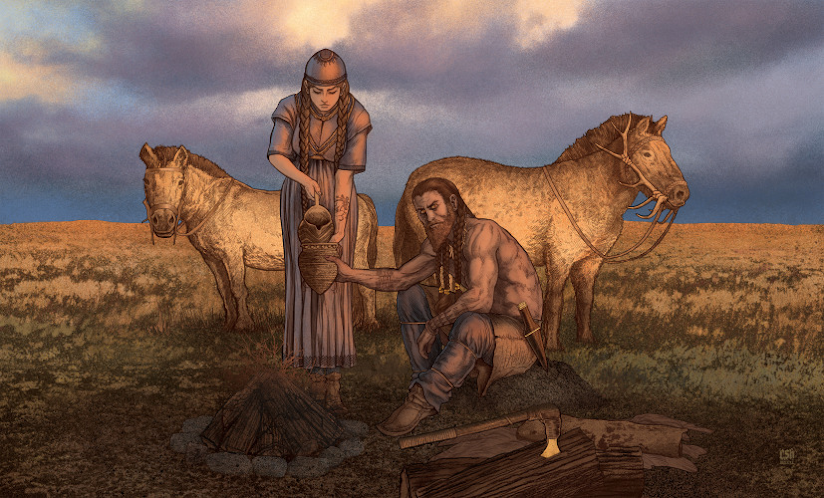

Credit: Christian Sloan Hall and Survive the Jive


The second one was the evidence of equestrianism. This is hard to prove in general, Anthony went into detail how skeletal evidence of horse riding in horses is hard to prove as vertebrae tend not to survive very well. Anthony pointed towards potential signs of bitwear in Botai, but recent investigations have suggested that the same type of erosion was also present in horse remains that are undoubtedly of wild horses [3]. This was something of a setback to Anthony’s theory of horse riding on the early bronze age steppes, which essentially limited his arguments to the inference of horse riding based on the cultural behaviour of these peoples.


A common proposal for the development of equestrianism was that horses were first used for traction, horse-drawn chariots in particular, which followed by wide-scale usage of horse riding in the iron age. This development seems mostly based on the chronology of human-equid interactions in the ancient Near East.


Librado et al. 2021 in their article on horse domestication focused a lot on the spread of the DOM2 horse breed in the second millennium B.C, primarily with charioteering, followed by horse riding afterwards with an emphasis on the Sintashta culture. However, their own data actually shows the spread of these DOM2 horses in a period that predates both the chariot and the Sintashta culture [3].


However, the rise of such profiles in Holubice, Gordinesti II and Acemhöyük before the earliest evidence for chariots supports horseback riding fuelling the initial dispersal of DOM2 horses outside their core region, in line with Mesopotamian iconography during the late third and early second millennia BC. Therefore, a combination of chariots and equestrianism is likely to have spread the DOM2 diaspora in a range of social contexts from urban states to dispersed decentralized societies.


Thus the seeds were planted for finding evidence of horse riding in the steppes in a period predating the onset of the Sintashta-Petrovka-Potopovka-Srubnaya cultural sphere, which I think can just be grouped together under a bronze age steppe chariot complex umbrella.
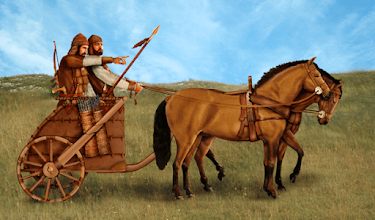

Credit: Yakov Petrov

Osteological evidence for horse riding had already appeared in several examples of the late third millennium B.C Bell Beaker culture, from Poland and Hungary respectively. However no such reports had been made about Yamnaya skeletons, until now of course.I will not dwell too much on the actual content of the article itself, as it is not too long or too complicated so I think you should read it for yourself.


Osteological evidence in itself however is not the strongest form of evidence however. Don’t get me wrong it is a strong indication but you can argue that such osteological could appear through other forms of activities. Even the act of riding itself does not necessitate horsemanship as you can pretty effectively ride on bovines actually. Check out this baller casually pulling up on a cow:


Another particular weakness of the article is that they did not employ any control groups such as Neolithic European agricultural populations away from the steppes, Mesolithic foragers or perhaps even proximate steppe populations such as Khvalynsk. The inclusion of such data could have really strengthened their case. Or maybe it would have debunked it?


One particular detail argued by Trautmann et al. that definitely strengthens their case however is that the osteological evidence most closely follows that of the “chair seat”, which you can see here below:
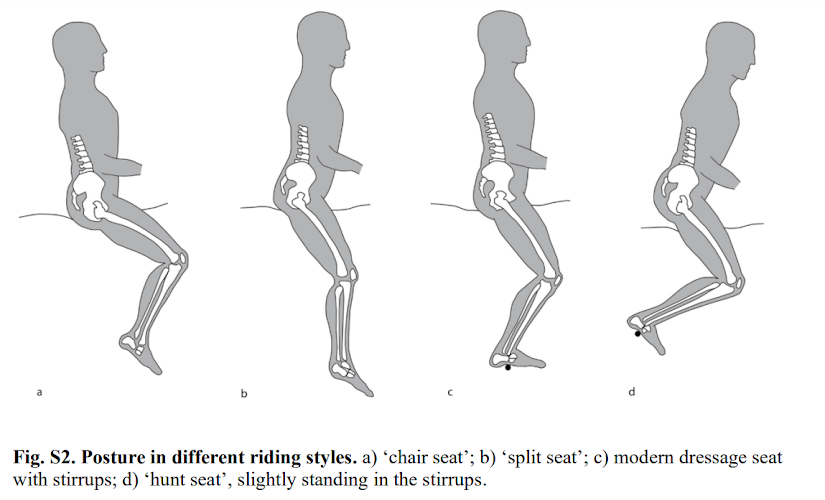


The chair seat is what one would sit in if there were no saddles utilized. Speaking from (very limited) personal experience, this is not exactly a very relaxing position and would lead to quite some pressure on the hips and femurs over time.


One sample they used that is particularly interesting is an eneolithic sample from Hungary, dating to 4400-4200 BC and thus being chronologically contemporary to the Tiszapolgar culture. The Tiszapolgar population in general is a continuation of the neolithic Tisza culture which itself is a derivative of the Hungarian Linear-band Keramik culture, so part of the Early European farmer population basically. 

“We also briefly discuss two 1750 to 1540 and 1611 to 1446 calibrated BCE Middle Bronze Age individuals from two Medgidia mounds in Romania and the cases of a 3331 to 2927 calBCE “pre-Yamnaya” individual of Blejoi in Romania and a 4442 to 4243 calBCE Copper Age individual of Csongrád-Kettőshalom in Hungary (individual nos. 064, 116, 118, 213, 215, 153, 161, 032, and 209 in Tables 1 and 2). These individuals display ≥4 of 6 (diagnostic threshold of >50%) skeletal traits indicative of the so-called “horsemanship syndrome” (26) with a high level of diagnostic certainty.”

“Special attention is deserved by the case of the individual of Csongrád-Kettőshalom in Hungary (fig. S12). Displaying five traits, this 25 to 35 years old scores as high as our five Yamnaya individuals and thus meets our requirements to qualify as a rider with a sufficiently high probability. However, his Copper Age date in the second half of the fifth millennium BCE and his geographical isolation call for caution because we lack comparably assessed skeletons of this period and his special cultural context.”

Here is the burial description from the supplementary files:

"In the western periphery of Csongrád – a town situated at the right bank of the river Tisza - , on

the top of a natural loess ridge running in a north-south direction, in 1963, during the rescue

excavation relating to sand mining of K. Nagy a Prehistoric solitary burial came to light (166, 167). According to the original excavation documentation, Grave 1 is oriented SE-NW, with the skull slightly supported, facing east. It was excavated at the northernmost point of the sand mound, but no traces of an earthen barrow above the grave could be identified. The outline of the grave pit was not observed, however the shape of its bottom (in a depth of -1.78 m) was indicated by red ochre sprinkle. The deceased was laid in a supine position, with characteristic raised legs at the knees; the flexed arms were laid parallel to the body with the hands resting on the thighs (Fig. S12/a). A 13.2 cm long obsidian blade with trapezoid profile turned up between the upper right arm and the rib cage; 5 beads made of coiled copper plate, lots of little cylindrical spondylus(?) and stone beads and 5 bigger cylindrical stone beads were found around the head and shoulders and around the raised legs (Fig. S12/b). A discrete clump of red ochre was more pronounced near the left pelvis (163, 168, 169). The absolute age, determined on the basis of radiocarbon dating of the human bone, is (Poz-41865) 5470 ±40 BP = 4442-4243 calBCE at 2σ (95.4% probability) (168). This dating corresponds well with the age of the local ECA (Tiszapolgár) communities."
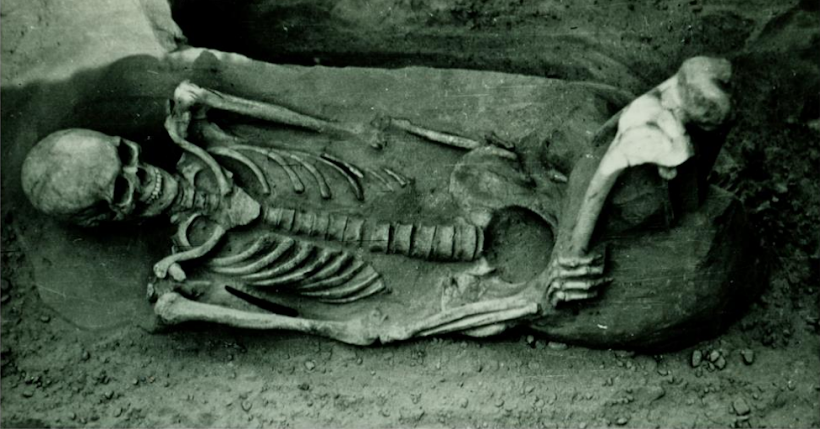
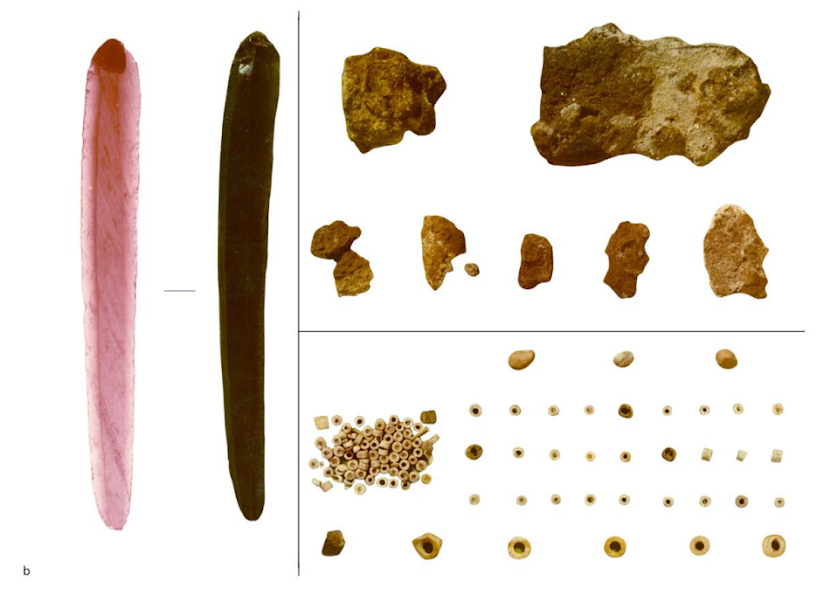

If you are familiar with David W. Anthony’s and Nadedzha Kotova works a bell should start ringing when you read about a grave that combines red ochre, knee-raised supine burial positions and obsidian blades, as these are all hallmark signs of the late eneolithic culture of the Steppes. Khvalynsk, Sredny Stog, the North Caucasian “Proto-Pit” peoples all had these features in their burials. Before this article came out and I quickly pieced this blog together I was working on a blog entry quite relevant to this era, so be on the outlook when it releases!


Normally the Tiszapolgar community had crouched burials rather than supine burials. Here are two typical cases of male and female Tiszapolgar burials [5]:
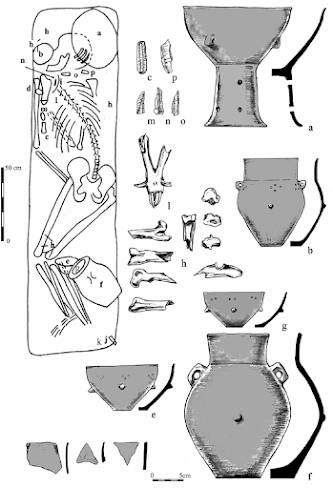
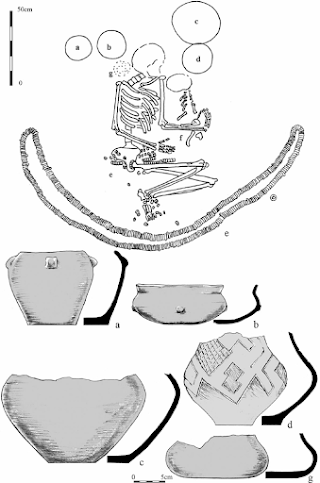

Speaking of familiarity with Kotova’s works, it seems this site was mentioned in her book on the Sredny Stog culture [6]:


“CHONGRAD Kurgan was investigated in 1962 in Eastern Hungary (Телегин, Нечитайло, Потехина, Панченко 2001). At a pit bottom an organic mat was traced, which was powdered with ochre. The skeleton lay flexed on the back with the head to the west and was painted with ochre (fig.113: 4). Its scull was trepanned with a hole on the back of head. Inventory included an obsidian blade and beads from copper, sandstone and Spondylus shells (fig.113: 5-27). “

“The majority of burials, which located on the territory to the west from the South Bug (Gonova Mogila, Decea Muresului, Kainary, Kasimcha, Kulevcha, Reka Devna, Suvorovo, Falciu, Lugoch), most likely were left by the population of the western variant of Sredniy Stog culture. This is supported by multiplicity and 68 diversity of metal tools and absence of such adornments as deer teeth, bone beads and blades from boar fangs. Materials of the Dzhurdzhuleshty burial mound are more similar to the burials of the eastern variant in such adornments as deer teeth, stone beads, sea shells with holes and presence of polished stone axes and bone tubules. They also find some analogies in the materials of the burials in Karataevo, Veselaya Roscha and Staronizhesteblievskaja. The burial from Chongrad in eastern Hungary, where beads from limestone were found, is also more similar to the monuments of the eastern variant.

“The pendants from deer teeth of the Nalchik cemetery are similar to the adornments of Karataevo burials. It is interesting, that during the Early Eneolithic in steppe Dnieper-Don interfluve the stone beads are known only in the cemeteries of the second period of Azov-Dnieper culture (5200-4700 DC), the first and the second periods of the eastern variant of Sredniy Stog culture (Staronizhesteblievskaja, Giurgiulesti, Chongrad). So, the adornments of Nalchik are typical to ones from the oldest Eneolithic monuments of steppe, which were synchronous with the Tripolye A and B I. “

Thus according to Kotova, the burial at Chongrad is part of the Eastern Sredny Stog culture. In her book there also is a drawing of the burial, and to me it looks like the same individual.
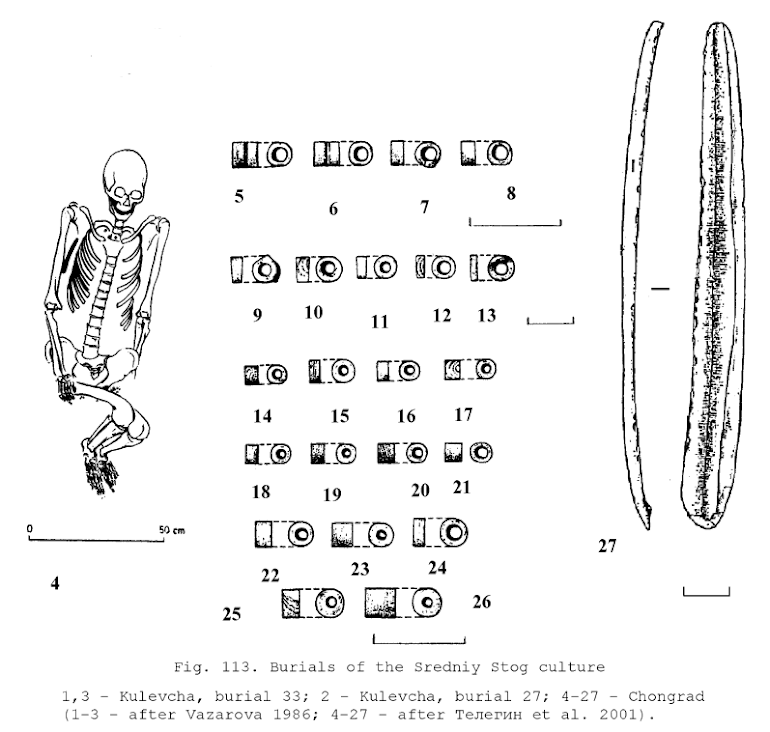


In David W. Anthony’s book The Horse, The Wheel and Language, this site is mentioned as well [7]:

"A second and seemingly smaller migration stream branched off from the first and ran westward to the Transylvanian plateau and then down the copper-rich Mureș River valley into eastern Hungary. These migrants left cemeteries at Decea Mureșulu in the Mureș valley and at Csongrad in the plains of eastern Hungary. At Decea Mureșului, near important copper deposits, there were fifteen to twenty graves, posed on the back with the knees probably originally raised but fallen to the left or right,colored with red ochre, with Unio shell beads, long flint blades (up to 22 cm long), copper awls, a copper rod "torque," and two four-knobbed mace heads made of black polished stone (see figure 11.10). The migrants arrived at the end of the Tiszapolgar and the beginning of the Bodrogkeresztur periods, about 4000-3900 BCE, but seemed not to disrupt the local cultural traditions. Hoards of large golden and copper ornaments of Old European types were hidden at Hencida and Mojgrad in eastern Hungary, probably indicating unsettled conditions, but otherwise there was a lot of cultural continuity between Tiszapolgar and Bodrogkeresztur. This was no massive folk migration but a series of long-distance movements by small groups, exactly the kind of movement expected among horseback riders."


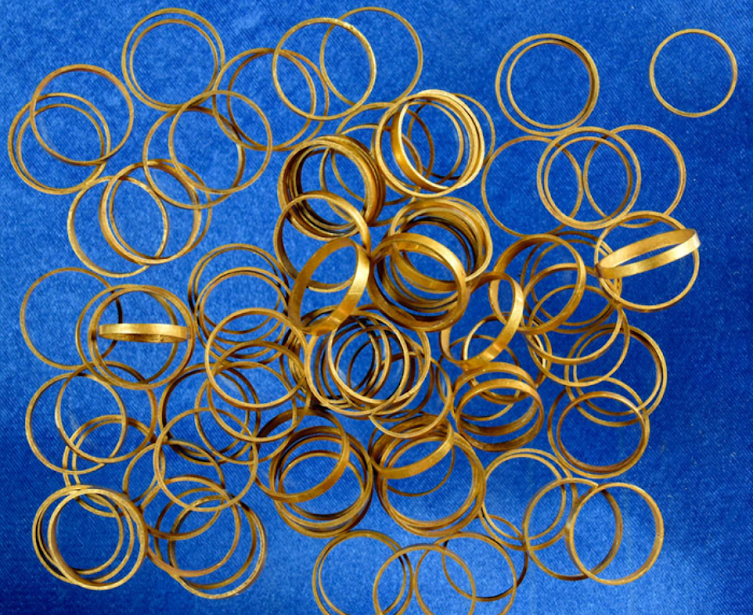
 Golden rings from a wealthy Tiszapolgar woman’s burial, apparently over 160 rings were found in her grave
It might be that this sample mentioned in David Anthony’s latest article on the Khvalynsk cemetery might be the same individual [8]:

“ A migrant from the steppes buried in Hungary at Csongrad-Kettëshalom Bastanya, contemporary with Khvalynsk, had Y-haplogroup Q1b, and autosomal DNA similar to Khvalynsk. This steppe male was part of a diaspora of steppe males into the Danube valley that occurred about 4400–4200 BCE.”

“Autosomally similar to Khvalynsk” is probably a bit of a reach, Anthony in this article is more or less creating the position that Sredny Stog was a quasi-Khvalynsk population as Sredny Stog being a Khvalynsk derivative does not work anymore. But from what we can tell Sredny Stog peoples predominantly were Yamnaya-like, and Khvalynsk definitely deviates from that genetic profile.


If this is the same individual as featured in Rauthmann’s article and that of Kotova, then this is seriously major news! Let me repeat it in all-caps and bolded, MAJOR NEWS! I do not understand why the authors more or less neglected this aspect of their article as it is by far the most interesting one.


Perhaps they are suffering from the “Yamnaya-disease”, which is a phenomenon that arose with the publication of Haak et al. 2015 and lead to a major academic emphasis on the Yamnaya as “The Proto-Indo-Europeans”, despite the fact that authors such as Anthony repeatedly stated that Yamnaya could only represent the late stage of Proto-Indo-European, with the early Proto-Indo-European stage coming from the Sredny Stog-Khvalynsk community on the steppes, or that there has yet to be any direct evidence that the Corded Ware population descends from Yamnaya rather than being a close relative of it.


A finding of osteological evidence of horse riding in a 5th millennium B.C individual of the Sredny Stog culture would be an even bigger vindication of Anthony’s theories than the finding that such osteological evidence also exists in the Yamnaya culture. Thus I find it fitting to close off this blog post with a quote from Anthony:

“Were the people of the Sredni Stog culture horse riders? Without bit wear or some other pathology associated with riding we cannot be certain. Objects from Dereivka tentatively identified as antler cheekpieces for bits could have had other functions. One way to approach this question is to ask if the steppe societies of the Late Eneolithic behaved like horseback riders. It looks to me like they did. Increased mobility (implied by smaller cemeteries), more long-distance trade, increased prestige and power for prominent individuals, status weapons appearing in graves, and heightened warfare against settled agricultural communities are all things we would expect to occur after horseback riding started, and we see them most clearly in cemeteries of the Suvorovo-Novodanilovka type.”

References:

  1. Levine, Marsha. (1990). Dereivka and the problem of horse domestication. Antiquity. 64. 727-740. 10.1017/S0003598X00078832

  2. Wilkin, S., Ventresca Miller, A., Fernandes, R. et al. Dairying enabled Early Bronze Age Yamnaya steppe expansions. Nature 598, 629–633 (2021). https://doi.org/10.1038/s41586-021-03798-4

  3. Taylor, W.T.T., Barrón-Ortiz, C.I. Rethinking the evidence for early horse domestication at Botai. Sci Rep 11, 7440 (2021). https://doi.org/10.1038/s41598-021-86832-9

  4. Librado, P., Khan, N., Fages, A. et al. The origins and spread of domestic horses from the Western Eurasian steppes. Nature 598, 634–640 (2021). https://doi.org/10.1038/s41586-021-04018-9

  5. Raczky, Pál & Siklósi, Zsuzsanna. (2013). Raczky, Pál & Siklósi, Zsuzsanna: Reconsideration of the Copper Age chronology of the eastern Carpathian Basin: a Bayesian approach. Antiquity 87/336 (2013) 555-573. Antiquity. 87. 555-573. 

  6. Kotova, Nadezhda. (2008). Early Eneolithic in Pontic Steppe.

  7. Anthony, David W. (2007)  - The Horse, The Wheel and Language  

  8. Anthony, David & Khokhlov, A. & Agapov, S. & Agapov, D. & Schulting, Rick & Olalde, Iñigo & Reich, D.. (2022). The Eneolithic cemetery at Khvalynsk on the Volga River. Praehistorische Zeitschrift. 97. 10.1515/pz-2022-2034. 


Saturday, May 14, 2022

Neolithic Don river foragers were a key component of Western Steppe Herder ancestry

While the question “When did the Western Steppe Herder genetic profile form?” was already covered here over at Museaum Scythia, us steppe affinicionados just received a major clue when it comes to the question of  “Where did the western Steppe Herder genetic profile form? from a massive upcoming paper authored by Mortin Alletoft, Martin Sikora, and Eske Willerslev to name a few of the many contributing authors.

Population Genomics of Stone Age Eurasia

DOI: https://doi.org/10.1101/2022.05.04.490594


Abstract

The transitions from foraging to farming and later to pastoralism in Stone Age Eurasia (c. 11-3 thousand years before present, BP) represent some of the most dramatic lifestyle changes in human evolution. We sequenced 317 genomes of primarily Mesolithic and Neolithic individuals from across Eurasia combined with radiocarbon dates, stable isotope data, and pollen records. Genome imputation and co-analysis with previously published shotgun sequencing data resulted in >1600 complete ancient genome sequences offering fine-grained resolution into the Stone Age populations. We observe that: 1) Hunter-gatherer groups were more genetically diverse than previously known, and deeply divergent between western and eastern Eurasia. 2) We identify hitherto genetically undescribed hunter-gatherers from the Middle Don region that contributed ancestry to the later Yamnaya steppe pastoralists; 3) The genetic impact of the Neolithic transition was highly distinct, east and west of a boundary zone extending from the Black Sea to the Baltic. Large-scale shifts in genetic ancestry occurred to the west of this "Great Divide", including an almost complete replacement of hunter-gatherers in Denmark, while no substantial ancestry shifts took place during the same period to the east. This difference is also reflected in genetic relatedness within the populations, decreasing substantially in the west but not in the east where it remained high until c. 4,000 BP; 4) The second major genetic transformation around 5,000 BP happened at a much faster pace with Steppe-related ancestry reaching most parts of Europe within 1,000-years. Local Neolithic farmers admixed with incoming pastoralists in eastern, western, and southern Europe whereas Scandinavia experienced another near-complete population replacement. Similar dramatic turnover-patterns are evident in western Siberia; 5) Extensive regional differences in the ancestry components involved in these early events remain visible to this day, even within countries. Neolithic farmer ancestry is highest in southern and eastern England while Steppe-related ancestry is highest in the Celtic populations of Scotland, Wales, and Cornwall (this research has been conducted using the UK Biobank resource); 6) Shifts in diet, lifestyle and environment introduced new selection pressures involving at least 21 genomic regions. Most such variants were not universally selected across populations but were only advantageous in particular ancestral backgrounds. Contrary to previous claims, we find that selection on the FADS regions, associated with fatty acid metabolism, began before the Neolithisation of Europe. Similarly, the lactase persistence allele started increasing in frequency before the expansion of Steppe-related groups into Europe and has continued to increase up to the present. Along the genetic cline separating Mesolithic hunter-gatherers from Neolithic farmers, we find significant correlations with trait associations related to skin disorders, diet and lifestyle and mental health status, suggesting marked phenotypic differences between these groups with very different lifestyles. This work provides new insights into major transformations in recent human evolution, elucidating the complex interplay between selection and admixture that shaped patterns of genetic variation in modern populations.


I think I need to plan some days off for when this article comes out because there will be tons of data to sift through when this article is out, this preprint is already a feast. But considering this is a steppe blog, I will focus on what I will think will be the new buzzword in the digital ancient Genetics community of 2022: The Don river foragers.

Interestingly, two herein reported ~7,300-year-old imputed genomes from the Middle Don River region in the Pontic-Caspian steppe (Golubaya Krinitsa, NEO113 & NEO212) derive ~20-30% of their ancestry from a source cluster of hunter-gatherers from the Caucasus (Caucasus_13000BP_10000BP) (Fig. 3). Additional lower coverage (nonimputed) genomes from the same site project in the same PCA space (Fig. 1D), shifted away from  the European hunter-gatherer cline towards Iran and the Caucasus. Our results thus document

genetic contact between populations from the Caucasus and the Steppe region as early as 7,300 years ago, providing documentation of continuous admixture prior to the advent of later nomadic Steppe cultures, in contrast to recent hypotheses, and also further to the west than previously reported.


A stiff jab to the Indo-European migration theory favoured by many of the geneticists in this field such as David Reich and his team at Harvard and Johannes Krause and his team at MPI. That theory wasn’t going to work out anyways, as most of the community had realized years ago. It is good that geneticists are catching up as well, or at least are putting it to paper. It most surely calls in question the scenario for WSH genetic formation as proposed by N. Patterson in Reconstructing the spatiotemporal patterns of admixture during the European Holocene using a novel genomic dating method”, which I replied to in my blog entry When did the Western Steppe Herder genetic profile form?. It will be interesting to say the least to see what the responses from the other geneticists in the field will be to these findings.

Fig 2. Genetic structure of European hunter-gatherers (A) Ancestry proportions in 113 imputed ancient genomes representing European hunter-gatherer contexts (right) estimated from supervised non-negative least squares analysis using deep Eurasian source groups (left). Individuals from target groups are grouped by genetic clusters. 


From approximately 5,000 BP, an ancestry component appears on the eastern European plains in Early Bronze Age Steppe pastoralists associated with the Yamnaya culture and it rapidly spreads across Europe through the expansion of the Corded Ware complex (CWC) and related cultures20,21. We demonstrate that this “steppe” ancestry (Steppe_5000BP_4300BP) can be modelled as a mixture of ~65% ancestry related to herein reported hunter-gatherer genomes from the Middle Don River region (MiddleDon_7500BP) and ~35% ancestry related to hunter-gatherers from Caucasus (Caucasus_13000BP_10000BP) (Extended Data Fig. 4). Thus, Middle Don hunter-gatherers, who already carry ancestry related to Caucasus hunter-gatherers (Fig. 2), serve as a hitherto unknown proximal source for the majority ancestry contribution into Yamnaya genomes. The individuals in question derive from the burial ground Golubaya Krinitsa (Supplementary Note 3). Material culture and burial practices at this site are similar to the Mariupol-type graves, which are widely found in neighbouring regions of Ukraine, for instance along the Dnepr River. They belong to the group of complex pottery-using hunter-gatherers mentioned above, but the genetic composition at Golubaya Krinitsa is different from the remaining Ukrainian sites (Fig 2A, Extended Data Fig. 4).

Here is the information on the Golubaya Krinitsa site from the supplementary files:

Golubaya Krinitsa, Middle Don, Russia. Cemetery. A.M. Skorobogatov The site was discovered in 2011 by Valery Berezutsky 132. The burial ground is located on the right bank of the Black Kalitva River (a tributary of the Don River), near its mouth. Excavations were carried out in 2015-2016 under the leadership of Andrey Skorobogatov. A total of 18 burials were studied (single, paired and collective). The burials were in rectangular pits, characterised by orientation to the south - southeast and southeast. The position of the buried is stretched out on the back, with arms located along the body. The bones are sprinkled with red ochre. The burials were accompanied by inventory: fossil sea shells, Unio shells and products from their wings, bone decorations (wild boar fangs, beaver teeth and groundhogs), bone tools, a copper product, flint tips, flint knives, and ceramics. The complex finds analogies in the Mariupol-type burial grounds widespread in the territory of modern Ukraine (Mariupol, Nikolsky, Lysogorsky, Yasinovatsky burial grounds), and can date back to the 6th millennium BC. Six samples were analysed, with datings ranging ca 6400-6700 uncal BP, corresponding to c. 5000-5400 cal BC: 120 NEO113, kurgan 10, burial 10 NEO204, burial 4 NEO207, burial 7 skeleton 2 NEO209, burial 7 skeleton 4 NEO210, burial 8 NEO212, burial 10 Literature: Berezutsky et al. 2011132. 


Sample ID

Y-DNA

MTDNA

Age

NEO113

R1a

U2e1a


5348 BC


NEO212

I2a1b1a2

U4a2a

5443 BC


Now these findings are certainly big news, but not a surprising one to the people who are regulars over at the Eurogenes blog community, because this falls perfectly in line with what Davidski had been saying for years at this point. Big Dave Davidski deserves most of the bragging rights, but I will toot my horn for a bit with this cheeky blast from the past of mine:


https://eurogenes.blogspot.com/2021/03/against-conventional-wisdom.html


I thought that the Western steppe Herder profile being the result of two populations with varying amounts of CHG related ancestries (one higher, one lower), as well minor European farmer input would make a lot of sense over a year ago. A bit more than a year later and here we are!


It would have been interesting if they had used progress/Vonyuchka (Steppe_Eneolithic)  as a reference for the excess CHG, because it is unlikely to be the case that pure “CHG” populations were still around at that time. If Steppe_Eneolithic populations  ~50% CHG, and these Don foragers have 30%, the CHG-related ancestry of 1-to-1 mixed offspring would be around 40%. If a 60/40 EHG/CHG population then gets 10% EEF ancestry that 40% would drop down to 36%, which is more or less the exact percentage Global25 gives for the amount of CHG ancestry in Steppe_EMBA.


What is strange however is that the authors state that Yamnya can be modeled as a mix of 65% Don foragers and 35% CHG related ancestry. If you think about it, this is mathematically infeasible. If the Don foragers ranged between 20 and 30% CHG, then the CHG ancestry mediated from those Don foragers would be 13% and 19.5%. With an extra 35% on top you would have CHG ancestry ranging between 48 and 54,5. Furthermore, as had been shown in Wang 2019, and argued by Davidski since the yesteryears, Steppe_EMBA carries Early European farmer ancestry and a 65% Don Forager 35% CHG model cannot account for that stream of ancestry.


Because these samples are not out yet, I decided to play around on Genoplot and I made some simulated coordinates for personal use. I will share some of the results here, as well as the coordinates, but I cannot guarantee the resulting coordinates will be exactly like these upcoming Don foragers. Only time will tell, thus take all of this with a grain of salt or two in the meantime!


The first step was to remove the farmer ancestry from Yamnaya Samara average, for which I used the G25 average of the Ukrainian Trypillian culture samples, coming out as 8.6%. Then I took that simulated coordinate, and did a 50% subtraction using Progress_En, and Vonyuchka_En. The results ended up looking like this:


Target

Distance

RUS_Karelia_HG

GEO_CHG

UKR_Trypillia

UKR_N

Yamnaya_RUS_Samara

0.05780318

54.8

36.6

8.6

0.0

SIM_Yamnaya_minus_Trypilia

0.06328255

60.0

40.0

0.0

0.0

SIM_Don_Forager_VON

0.09929497

72.8

24.6

2.6

0.0

SIM_Don_Forager_PROG

0.08850837

63.4

30.6

2.2

3.8

Average

0.07722227

62.8

33.0

3.3

0.9


The simulated coordinate using the Progress as a subtraction seems to be a great match. Some small frequencies of Tryplia ancestry showed up in the simulated coordinate, but I doubt that is real. It just seems a side effect from the subtraction method. Without those references I got this:


Target: SIM_Don_Forager_PROG

Distance: 8.8643% / 0.08864262

61.2 RUS_Karelia_HG

32.0 GEO_CHG

6.8 UKR_N


Target: DonForager_Sim_VON

Distance: 9.9576% / 0.09957630

73.4 RUS_Karelia_HG

26.0 GEO_CHG

0.6 UKR_N


Using the Global25 West Eurasia PCA, here are the positions of simulated coordinates compared to a bunch of relevant ancient genomes:


Coordinates (scaled):
SIM_Yamnaya_minus_Trypilia,0.12572772,0.08173409,0.04288392,0.13042565,-0.03831749,0.0522349,0.00369911,-0.00278374,-0.06393434,-0.08486282,0.00268118,0.0003042,-0.00193857,-0.02596296,0.04054442,0.01584923,-0.00501566,-0.00306472,-0.005586,0.01567796,-0.00318016,-0.00008071,0.01168853,0.02206198,-0.00400613
SIM_Don_Forager_PROG,0.13706294,0.08781118,0.06955134,0.1450548,-0.02231748,0.0548273,0.00669322,0.00274002,-0.05434218,-0.08589664,-0.00178264,-0.0010401,-0.00030914,-0.02687892,0.04973734,0.02897996,0.00235518,-0.00277194,-0.0089725,0.02460292,0.00025268,-0.00312892,0.01357906,0.03797896,-0.00513826
SIM_Don_Forager_VON,0.13877044,0.08222618,0.08275084,0.1629823,-0.01723898,0.0584528,0.00175822,0.00527852,-0.04830868,-0.08425664,0.00081536,-0.0025386,-0.00432314,-0.03472292,0.04308684,0.01923546,0.00418068,-0.00283544,-0.010544,0.02597792,-0.01459532,0.00095158,0.01425706,0.05195596,0.00156774

Now the interesting part is to gauge the amount of variety in terms of amount of “Don forager” ancestry there was present in various Western steppe Herder genomes. I chose two Yamnaya clusters, The Afanasievo samples from the Russian Altai and several early Corded Ware samples that seem maximized in WSH ancestry.


Yamnaya from Samara:


Target

Distance

SIM_Don_Forager_PROG

RUS_Progress_En

UKR_Trypillia

UKR_N

Yamnaya_RUS_Samara:I0429

0.02350929

57.8

36.8

5.4

0.0

Yamnaya_RUS_Samara:I0439

0.02245629

51.2

35.8

13.0

0.0

Yamnaya_RUS_Samara:I0370

0.02138359

49.4

41.8

8.8

0.0

Yamnaya_RUS_Samara:I0444

0.02890991

45.8

43.6

7.4

3.2

Yamnaya_RUS_Samara:I0438

0.02161781

44.0

51.0

5.0

0.0

Yamnaya_RUS_Samara:I7489

0.02621860

38.2

54.4

7.4

0.0

Yamnaya_RUS_Samara:I0443

0.02665377

37.0

53.4

8.4

1.2

Yamnaya_RUS_Samara:I0231

0.01831591

36.2

51.2

7.4

5.2

Yamnaya_RUS_Samara:I0357

0.01835266

34.2

50.4

13.0

2.4

Average

0.02304643

43.8

46.5

8.4

1.3


Yamnaya from Kalmykia:


Target

Distance

SIM_Don_Forager_PROG

RUS_Progress_En

UKR_Trypillia

UKR_N

Yamnaya_RUS_Kalmykia:RISE546

0.05267381

48.8

45.6

5.6

0.0

Yamnaya_RUS_Kalmykia:RISE240

0.03285146

46.8

39.8

13.4

0.0

Yamnaya_RUS_Kalmykia:RISE550

0.02225610

45.0

41.4

13.0

0.6

Yamnaya_RUS_Kalmykia:RISE552

0.02609195

34.2

58.6

7.2

0.0

Yamnaya_RUS_Kalmykia:RISE547

0.02992127

33.2

51.6

10.2

5.0

Average

0.03275892

41.6

47.4

9.9

1.1


High steppe_EMBA early Corded Ware:


Target

Distance

SIM_Don_Forager_PROG

RUS_Progress_En

UKR_Trypillia

UKR_N

Corded_Ware_CZE_early:OBR003

0.01997238

68.2

14.4

17.4

0.0

Corded_Ware_Baltic_early:Plinkaigalis242

0.02452369

58.4

20.6

16.0

5.0

Corded_Ware_CZE_early:PNL001.merged

0.02816527

57.0

31.8

10.2

1.0

Corded_Ware_Baltic_early:I4629

0.04521042

53.2

32.2

8.4

6.2

Corded_Ware_CZE_early:VLI076

0.02573414

48.4

35.2

12.6

3.8

Corded_Ware_CZE_early:VLI090.A0101

0.03456742

47.2

29.6

19.6

3.6

Corded_Ware_Baltic_early:Gyvakarai1_10bp

0.02425551

45.4

29.8

19.0

5.8

Corded_Ware_CZE_early:VLI007.merged

0.05436050

41.6

35.0

15.6

7.8

Average

0.03209867

52.4

28.6

14.8

4.1


Afanasievo from the Altai region:


Target

Distance

SIM_Don_Forager_PROG

RUS_Progress_En

UKR_Trypillia

UKR_N

RUS_Afanasievo:I6711

0.04005041

67.4

30.6

2.0

0.0

RUS_Afanasievo:I3387

0.03865066

56.2

39.8

4.0

0.0

RUS_Afanasievo:I10565

0.02253946

51.0

41.8

7.2

0.0

RUS_Afanasievo:I2069

0.02543367

50.0

44.8

5.2

0.0

RUS_Afanasievo:I5278

0.03744332

47.4

48.4

4.2

0.0

RUS_Afanasievo:I5271

0.03669026

45.4

51.4

3.2

0.0

RUS_Afanasievo:I2071

0.02809724

45.2

45.2

9.6

0.0

RUS_Afanasievo:I1829

0.02726509

43.2

46.0

8.2

2.6

RUS_Afanasievo:I5270

0.03632696

40.4

46.4

9.8

3.4

RUS_Afanasievo:I5273

0.02599122

40.0

48.2

11.8

0.0

RUS_Afanasievo:I3952

0.02501622

38.2

53.4

8.4

0.0

RUS_Afanasievo:I11752

0.02823817

37.0

55.4

6.0

1.6

RUS_Afanasievo:I5269

0.02266377

36.6

52.6

10.8

0.0

RUS_Afanasievo:I3388

0.01976090

35.8

52.6

11.6

0.0

RUS_Afanasievo:I6713

0.02689139

35.6

55.2

9.2

0.0

RUS_Afanasievo:I5277

0.03757972

35.4

58.8

4.6

1.2

RUS_Afanasievo:I5272

0.03390484

33.2

56.8

10.0

0.0

RUS_Afanasievo:I3954

0.02841254

29.6

65.4

4.0

1.0

RUS_Afanasievo:I6715

0.02684281

28.2

64.4

6.4

1.0

RUS_Afanasievo:I3950

0.03422087

28.0

63.6

6.0

2.4

RUS_Afanasievo:I5279

0.04567883

26.4

67.0

3.0

3.6

RUS_Afanasievo:I10564

0.03384626

25.2

66.6

8.2

0.0

RUS_Afanasievo:I11112

0.03851630

21.4

66.8

10.8

1.0

Average

0.03130700

39.0

53.1

7.1

0.8


The range  in terms of the amount of  “Steppe_eneolithic” to “Don forager” ancestry is what immediately stood out to me, and I found it a bit surprising actually. What should be said though is that a small difference in actual CHG ancestry would make a large difference in terms of ancestry reflected by Progress_en and the simulated coordinate as these two are the two only references containing CHG ancestry, one having less than the samples above and the other more.


The interesting thing is that while Corded Ware samples seem to carry the highest amount of this simulated “Don forager” component, some Afanasievo and Yamnaya samples are fully within the same range, but individuals in their groups also are shifted towards Progress_En which brings the average down. This also seems consistent with early Corded Ware samples having a bit less CHG ancestry than the Yamnaya samples, on average.


If this degree of variation will be replicable through different sources, we have somewhat of an interesting scenario out our hands. One explanation could be that you had somewhat of a genetic cline between the “Don forager” cluster and the “Steppe_En” cluster, with the early Yamnaya, Corded Ware and Afanasievo samples originating from variable points on this genetic cline, thus explaining the variety of the samples. That being said, some of these steppe_en samples only slightly predated the aforementioned material culture by a few centuries and you can imagine that when the Yamnaya and Afanasievo had their eastwards expansions they could have come across people with a steppe_en profile and intermixed with them. It might be a combination of both those factors that lead to the variation seen above.


That said I’m not reading too much into the actual percentages for now, but if something similar will be demonstrable through software such as qpadm when the data of this article is finally released, that would be interesting of course.


In the meantime if anyone wants to help me out, calculating the amount of EHG/WHG/CHG/EEF ancestry in these samples would be helpful for me to figure out if the variation seen here is genuine, or if small discrepancies in CHG ancestry are creating a bit of a mirage:


  • I0429

  • I0357

  • OBR003

  • PNL001

  • VLI007

  • I6711

  • I5270

  • I11112


For what it is worth, a well-connected friend of mine got his hands on an unpublished Sredny Stog sample from the eastern banks of the Dnieper river dating to 4340-4178 calBCE. Unfortunately this sample does not have Global25 coordinates yet, but my mate converted the raw files into K13 which were then converted into Global25 coordinates, I assume through genoplot. So I wonder what the degree of accuracy is here, but what the hell, who cares right?


Target: SrednyGirl_I2108-K13-sim_scaled

Distance: 6.3291% / 0.06329125

52.2 RUS_Karelia_HG

37.8 GEO_CHG

10.0 UKR_Trypillia

0.0 UKR_N


Target: SrednyGirl_I2108-K13-sim_scaled

Distance: 1.5542% / 0.01554206

51.4 RUS_Progress_En

38.4 SIM_Don_Forager_PROG

10.2 UKR_Trypillia

0.0 UKR_N


So this 5th millennium BC lass, within the early periods of  the Proto-Indo-European language is more or less virtually identical to the Yamnaya, Corded Ware and Afanasievo samples from a thousand years later, and in terms of ancestry correlating to the  “Simulated Don forager” and “Steppe_Eneolithic” references is also similar and within range. 


Coordinates:

SrednyGirl_I2108-K13 sim_scaled,0.1233,0.0904,0.0368,0.1115,-0.0274,0.0393,0.0048,-0.0006,-0.0572,-0.0687,0.0033,0.0016,-0.0052,-0.018,0.0364,0.0101,-0.0085,-0.0009,-0.0031,0.0098,-0.0026,0.0012,0.0109,0.0256,-0.0044


This article will be absolute banger when it comes out, and aside from this segment that is relevant to the origins of the Proto-Indo-European language there is a lot more to look for.  I mean over 300 samples and an extensive use of IBD clustering with these samples is nothing to scoff at. 


The findings during the Scandinavian late neolithic and bronze age, with the high IBD sharing between the Nordic Bronze age samples carrying I1 lineages and iron age Germanic samples. However, given that Germanic itself is an iron age expansion rather than a bronze age one and the expansion came by people most certainly not limited to I1, this finding in itself does not “solve” the question of Germanic origins, but it definitely puts us closer.


The neolithic and bronze age samples from the Altai and the iron age sample from the Volga are also on my “can't wait until they are published list”, the latter will in my opinion have some implications for the spread and genetic formation of Uralic speakers and their genetic profiles during the late bronze and early iron age. But I will hopefully cover that in due time, I might know of a discussion topic that could cover both of those locations in one swoop.